

Your Kids Will Inherit a Beautiful Archive of a Childhood That Never Happened
My father shot hours of boring VHS in the 80s and 90s. My iPhone shoots fifteen-second smiles. One of these is a real archive. The other is going to leave a whole generation with nothing.
Hey. Before we get into it, a few things I have been loving these past few weeks and think you should know about. Hal and Harper on Mubi is buried where almost nobody is going to find it, which is a shame, because it is worth every minute. The video game Mixtape has been a small obsession. And Widow’s Bay on Apple TV is funny and scary in equal measure, which is a very hard thing to pull off and almost nobody does. Go find them.
WHAT FOLLOWS IS NOT A STORY ABOUT MEMORY.
IT IS A STORY ABOUT WHAT WE ARE QUIETLY HANDING OUR CHILDREN.
My father bought the JVC camcorder in São Paulo, Brazil, sometime in the late eighties. Black and red, handheld, the model that took the small VHS-C cassettes you slid into a plastic adapter to play in a regular VCR. You remember those, or am I just dating myself?
He read the manual.
He bought the carrying case.
He learned to white-balance.
For most of the next decade, when something was happening in our family, the camera came out, and he pressed record, and he let it run. He was not making movies. He was not framing shots. He was leaving the camera on while life happened, because the cassettes were almost over and he did not want to miss anything.
The tapes sat in a closet for thirty years. I had been meaning to convert them for almost as long as they had been sitting there.
Last year I finally did it. A service in my hometown took the cassettes and sent back a stack of DVDs in a cardboard box. I told my parents we were going to watch them together. I imagined an evening of laughter and tears. I imagined catharsis.
What I got was the three of us in a room, and my mother going quiet about fifteen minutes in, and my father getting up to get water and not coming back for a while, and me sitting there watching a kid I did not recognize move through rooms I did not remember, in a country I had left, surrounded by relatives most of whom were now dead.
Nobody finished a single DVD. Nobody asked to put another one in.
The DVDs went into a drawer. They are still in the drawer.
I have been trying to write about that evening for two years and I could not figure out what I was trying to say, until I read Ben Lerner’s new novel and rewatched a film I had seen four years ago and finally understood what had happened to my family in our living room.
WHAT MY FAMILY COULD NOT WATCH IS WHAT OUR CHILDREN
WILL NEVER HAVE TO WATCH… AND THAT IS THE WHOLE PROBLEM.
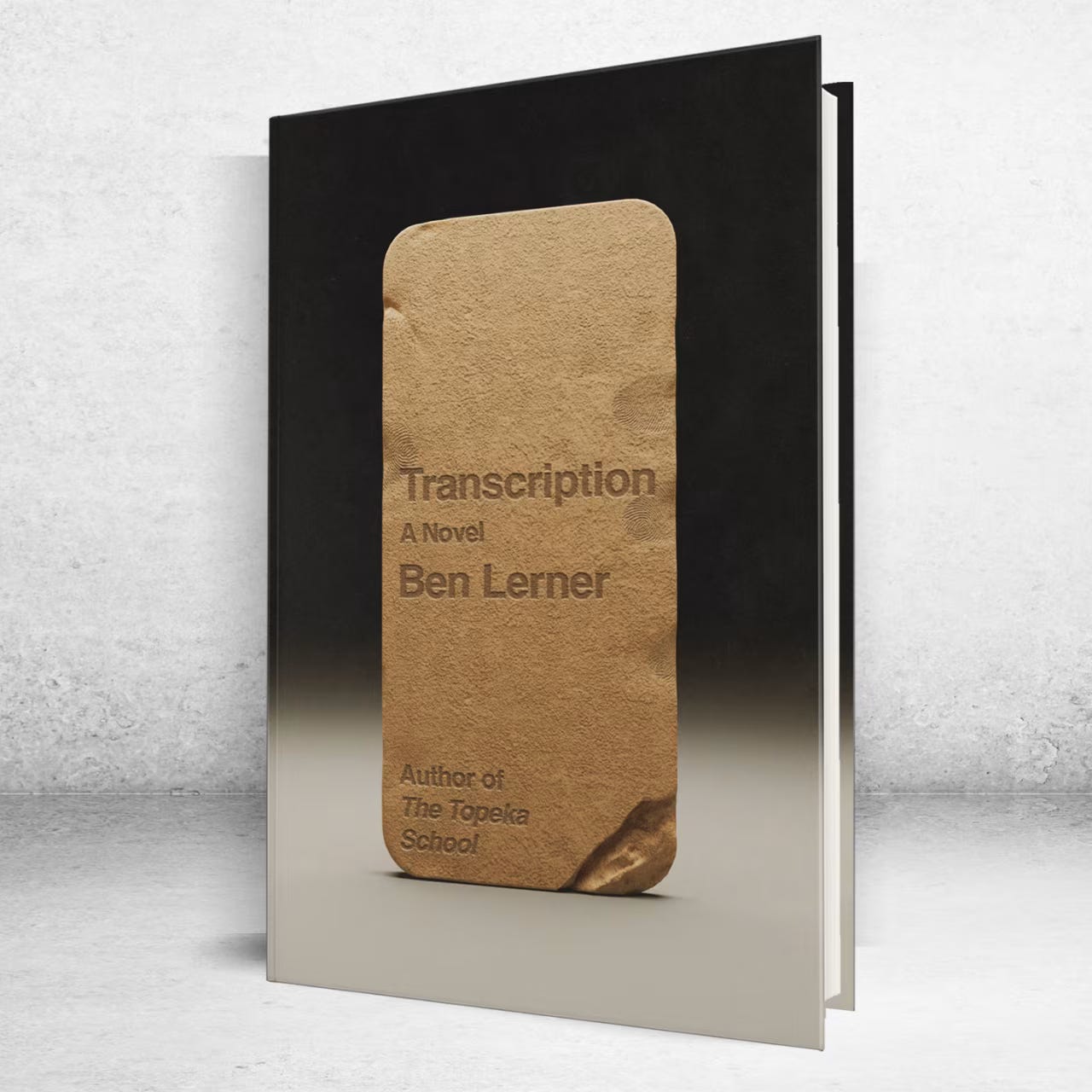
The novel is Transcription. It came out about a month ago.
It is short, around 140 pages, and it begins with a man dropping his phone in a hotel sink in Providence, Rhode Island, the morning of the most important interview of his career.
He has come to record what will be the final published conversation with his ninety-year-old mentor, a giant of the arts named Thomas. The phone is dead. He cannot bring himself to admit this when he arrives at the house.
He sets the broken phone face-down on the table, pretends to record, and writes the entire interview from memory afterward. The interview gets published. The world receives it as the truth.
The film is Aftersun, Charlotte Wells’s debut from 2022. A father and his eleven-year-old daughter on a cheap holiday in Turkey in the late 1990s.
He films her on a DV camcorder. She films him. The footage is intact. The framing device of the film is that the daughter, Sophie, is now in her thirties, watching the tapes back.
She has the recording, but the recording is kind of useless. Whatever she needs to know about her father is not on the tape. It is in what the tape couldn’t catch, what the eleven-year-old couldn’t see, what a thirty-something woman has finally lived enough loss to recognize.
One man has nothing and writes an interview from memory. One woman has everything and finds nothing. They are doing the same work.
The recording is not the memory. The labor of building meaning out of what survives is the memory.
The device, working or broken, is incidental.
THE PHONE IS THE FIRST ARCHIVE IN HUMAN HISTORY THAT
WAS DESIGNED TO AGREE WITH THE PERSON WHO OWNS IT.
I had assumed something else.
I had assumed, for the better part of forty years, that the device was the memory. That if you saved the photos, screenshotted the texts, kept the voicemails, converted the cassettes, the past would be retrievable.
The unspoken promise was that nothing would be lost.
You would not lose your child’s voice at four.
You would not lose what your father looked like the year before he got sick.
You would not lose anything, because the storage was infinite and the resolution was good and the cloud was holy.
The night with the DVDs was the moment I learned the promise was a lie. None of it had worked. We had saved everything and recovered nothing. My mother, who had spent the last decade carrying versions of her dead relatives around inside her, had built kind versions of them, soft versions, versions she could live with. The tape did not show those versions.
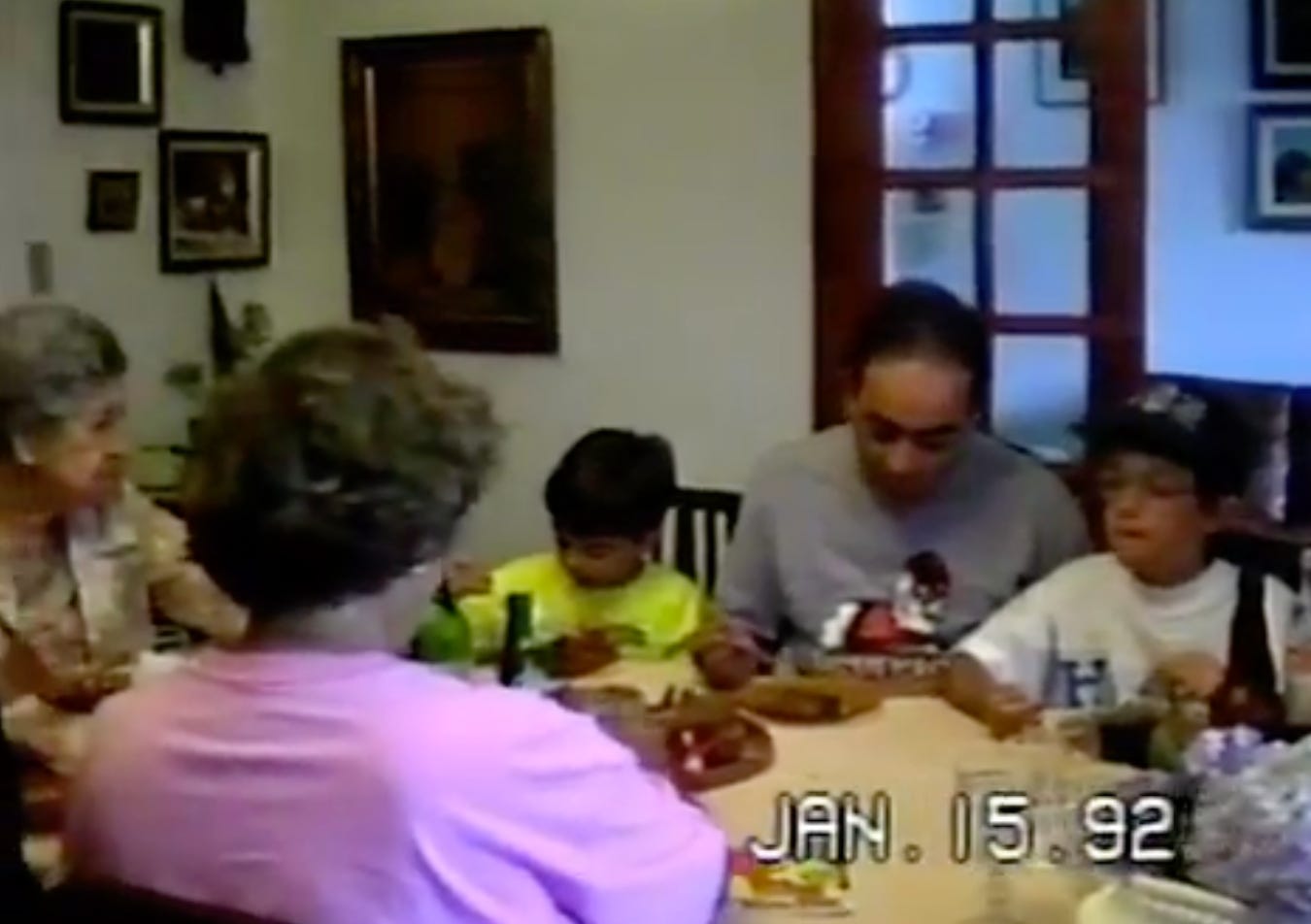
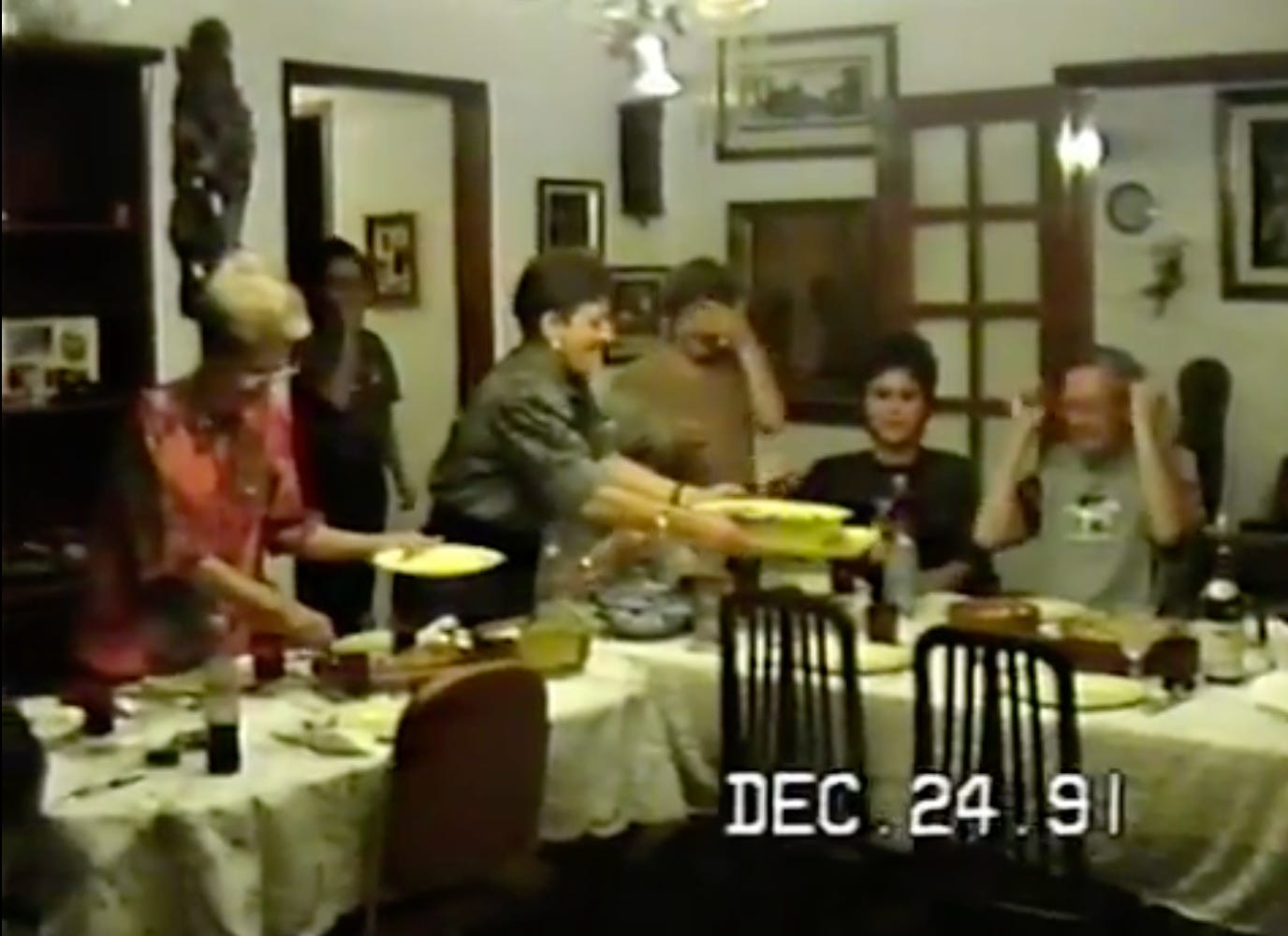
The tape showed her her mother, her father, her brother, her grandmother, and her aunt as they actually had been, twenty minutes at a time, talking around a kitchen table in 1991, alive in their bodies, laughing at things only they understood, performing nothing for the camera because the camera had been on for so long they had forgotten it was there.
That is what she could not bear.
Not grief in the standard sense. The standard sense is that you miss someone. She had been missing them for years. What the tape did was something the photographs in her drawer had never done.
The photographs had collaborated with her version. A photograph is a single frame. It is a prompt. The brain completes the rest with the version of the person you have been carrying.
The video does not let the brain complete. The video shows duration. Twenty minutes of her family at the table, in their actual rhythms, with their actual laughs, doing all the small things that made them themselves and that her carried version had long since smoothed away.
The photograph is a collaboration with the dead. The video is an exposure. My mother had been able to live with the photographs. The video took something from her she had not agreed to give, which was the difference between her version of her family and her family as they actually had been. She got fifteen minutes in and went to bed.
My father, I think, was working through a separate problem.
He was watching the version of his family that thought itself worth filming. A man saves up for a JVC in 1989 because he believes the people in his life are worth preserving. The act of buying the camera is an act of optimism. He pressed record on a young wife, two small kids, brothers and sisters and parents who would be there forever.
The tape is a record of that optimism. To watch it now is to watch yourself believing things that turned out not to be true.
He did not stop the DVD. He just got up. He came back later. He did not say anything about it. I do not blame him.
THE TAPES SHOWED MY PARENTS WHO THEY USED TO BE.
THEY SHOWED ME SOMEONE I HAD BEEN TRYING NOT TO BE.
I had a different problem.
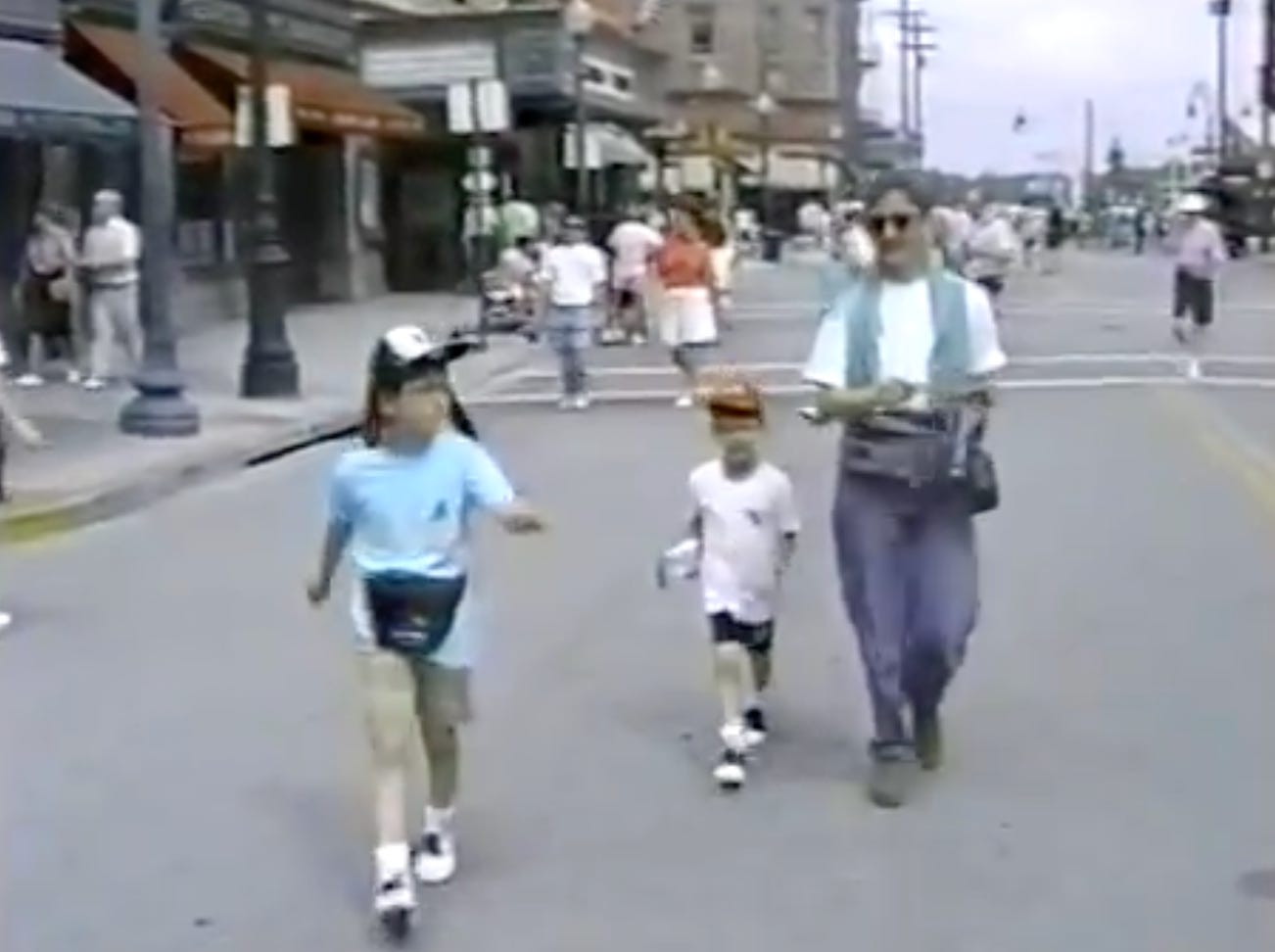
I did not recognize the kid on the screen.
I want to be careful about this part because the easy thing to say is that I felt nothing, and that is what I have been telling myself for a year, and it is not true.
What I felt was something I do not have a clean word for.
The kid on the tape was awkward in a way I have not been awkward in decades, at least not in the same way.
He pulled at his shirt.
He stood slightly apart from his cousins.
He laughed at the wrong beat.
He was too eager.
He was too quiet.
He was working too hard in the room.
None of it was catastrophic. None of it was a wound. It was the ten-thousand-data-point texture of a kid who had not yet figured out who he was, and who was struggling, in small and ordinary ways, to fit into a family of louder and more confident people.
The adult Rodrigo has spent thirty years not being him. The work has been mostly successful, I hope. I do not pull at my shirt anymore. I know the beat to laugh on. I have built a self that the kid on the tape would not recognize and that, watching back, did not recognize him either.
The foreignness was not a failure of memory. The foreignness was the measure of how much of him I have had to leave behind in order to become whoever I am now. The tape was the moment that work, which I had been doing quietly and mostly unconsciously for decades, was interrupted.
The kid was right there. He was a stranger because I had made him one.
There is something else, which is harder to write about, so please bear with me…
The kid did things I now regret. The tape did not show the worst of them, but it showed the apparatus that produced them. The eight-year-old who would later, on a Christmas I cannot stop revisiting, complain loudly about a gift my father had picked out for me.
My father, who had spent weeks thinking about what would make me happy.
My father, who was trying to please me, to connect with me, to give me something that mattered.
The spoiled kid did not see it.
The adult sees it now with painful clarity, and the adult cannot apologize to that version of my father, because that version of my father is gone, replaced by an older man who has long since forgotten the gift and would be confused if I brought it up.
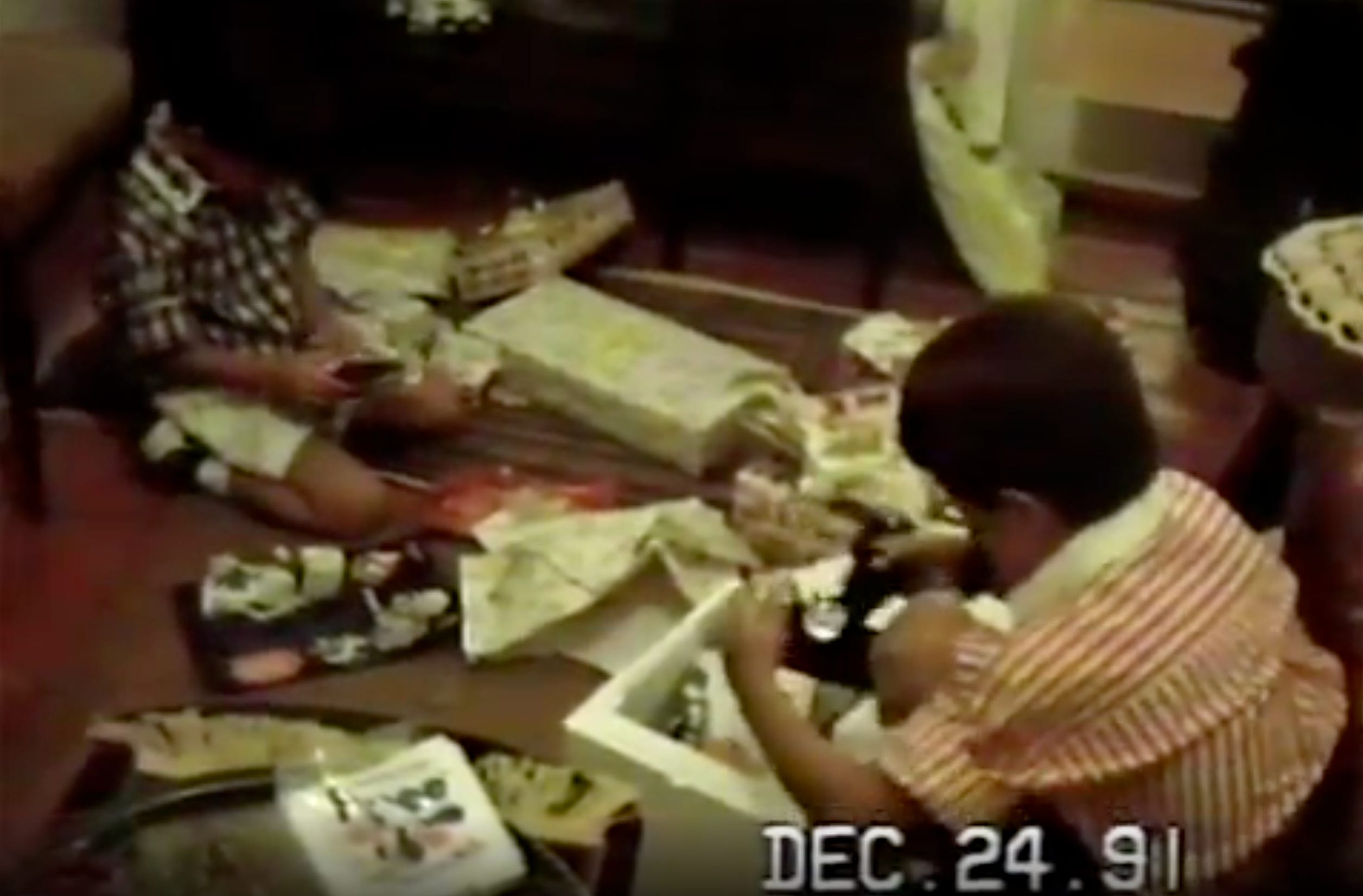
The tape did not show that specific Christmas. But the tape showed the kid in the rooms before the Christmas and the rooms after the Christmas, and the kid in those rooms was the kid who would do it.
I watched him and I understood that he was the foundation of me, that I had grown out of him whether I liked it or not, and that the small selfishness I have spent decades trying to grow past was visible right there, in the way he turned away from his cousin, in the way he interrupted his aunt, in the way he expected, the way kids expect, to be the center of the room.
None of it was unusual. All children are like this. The interesting thing was not that the kid was selfish. The interesting thing was that the adult, watching, was bothered, and wished it had been different, and could not look away.
This is the thing the duration footage does that snapshots cannot do.
A photograph cannot show you the small mean thing the kid did between the smile and the next smile. The video can.
The video preserves the moments the kid did not perform for, the moments the camera caught him being himself in rooms full of people he was not yet old enough to see clearly. Those moments are what childhood actually was.
Those moments are what no one was ever supposed to be able to play back.
My father, by buying a JVC and letting it run, preserved them by accident. He did not know he was doing this. He was just letting the camera record.
THE FUTURE WILL LOOK AT US AND
SEE ONLY THE VERSION WE APPROVED
I think this is what Aftersun is about, although the film is gentler than my living room. Sophie watches her father at length, in moments he did not know he was being recorded, and she meets a person her eleven-year-old self could not see.
The most famous scene in the film is Calum dancing — as represented by the strobe lighting, Sophie's understanding of her father is incomplete, unreliable and contradictory, which means that she needs to use some old VHS footage along with her memory and imagination to truly connect with the real Calum. Soon, Sophie starts to discover that Calum wasn’t as happy as she once thought.
The book Transcription is the same operation in a different mode. Lerner’s narrator does not have the recording. He has a memory of a conversation, and he has the discipline to sit with it long enough to write down what was actually said. What he produces is more truthful than a transcript would have been, because he had to weigh every sentence before committing it to the page.
Aftersun and Transcription are interested in the same thing my mother was running from. The recording is not the memory. The memory is a thing you build, every time, out of materials that were never sufficient, and what you build is shaped by what you need it for now. My mother’s family on the tape was not the version she had been carrying, and the carried version was the version that let her keep going. To replace the carried version with the tape version would be to lose the work she had been doing, quietly, for years, to make her relatives livable inside her.
So she stopped the DVD. She protected the work.
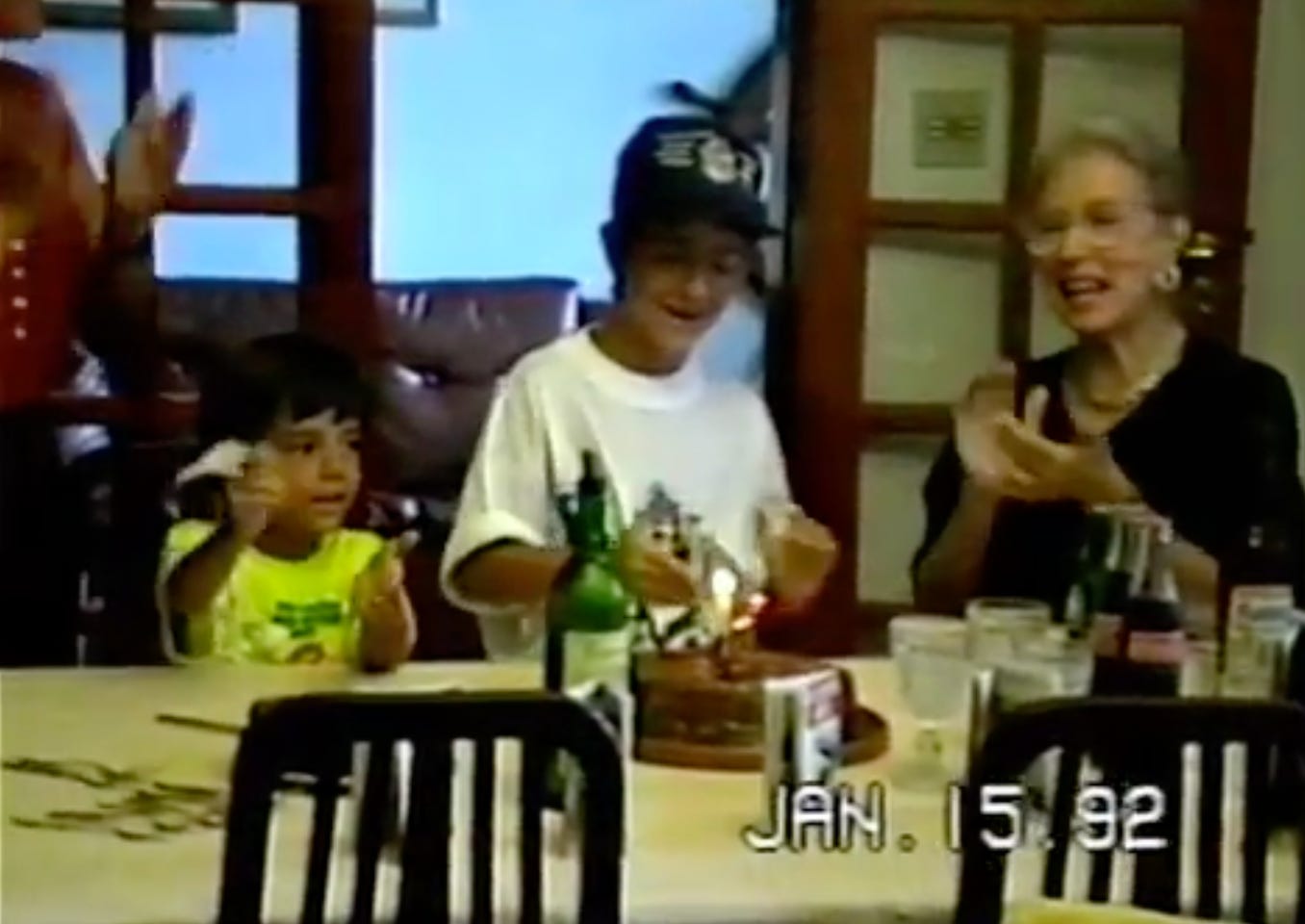
I did not have her work to protect. I had a kid I had been editing out of myself for thirty years, and the tape brought him back. I have not stopped thinking about it. The memory of the gift Christmas keeps surfacing. The memory of the kid in the room of cousins keeps surfacing. The adult is doing some kind of accounting. The accounting will not finish. I do not think it is supposed to finish.
The kid is the soil out of which I grew, and the adult cannot disown him without disowning the foundation of the adult, and the regret I feel about him is part of what makes me the kind of forty-something man who notices, now, when his father is trying to connect with him, and who tries not to miss it.
Maybe that’s the cruelest part of growing older, by the way: realizing your parents were reaching for you long after you stopped reaching back.
KIDS WILL INHERIT A BEAUTIFUL ARCHIVE, AND THEY WILL NOT KNOW WHAT IS MISSING FROM IT, BECAUSE THE MISSING THINGS WERE NEVER RECORDED.
I do not think this type of footage is going to exist for the next generation.
Their parents are not letting cameras run. Their parents are filming in fifteen-second bursts. The decisive moment is the unit. The boring middle is being deleted in real time, before it has been recorded, because nobody shoots the kitchen at five in the afternoon when nothing is happening. Nobody shoots an aunt setting a table for three minutes.
The contemporary archive is full of best moments.
Smiles, candles, hikes, hugs at the airport. The archive is enormous and curated, and the curation happened at the moment of capture, and the moment of capture is now the moment the kid is performing for his parents, who are performing for the camera, which is performing for the platform.
The kids will sit down at forty and look at the archive and find a thousand of their best frames.
The frames will collaborate with the version of themselves they have been carrying. The frames will not contradict them. The frames will not show them being awkward in a room of cousins, because their parents stopped recording when the awkwardness started.
The iPhone photos and Memories will not show them doing the small mean thing between the smile and the next smile, because nobody filmed it.
They will reach for their childhoods and find a co-conspirator. The co-conspirator was their parent, but the co-conspirator was also the platform and the algorithm and the cultural expectation of what a family clip should look like, and what they will inherit is a record of a childhood that was performed, not lived, and they will not have anything to compare it against.
THE EDITED ARCHIVE MAY ALSO MAKE
CHILDHOOD FEEL LIKE A KIND OF BRAND CAMPAIGN
What is being lost is not nostalgia. Nostalgia will be fine. Nostalgia thrives on snapshots.
What is being lost is the encounter with the unedited self. The kid in the room of cousins, working too hard to fit, doing things he will later regret, surrounded by people who will not all live to see him grow up. That kid only survives in duration. That kid only survives if the camera was on for too long, in the wrong moments, on the boring days, when nobody knew they were being preserved.
My DVDs and VHS tapes are still in the drawer. My parents have not asked to watch them again. I have not asked either. The work the evening was supposed to do did not get done, and yet here I am, two years later, still doing it. The encounter happens slowly. The encounter happens by accident. The encounter happens, sometimes, or at least in my case, in writing, when the writer goes looking for something else and finds the kid in the room of cousins waiting for him at the bottom of the page.
What my father preserved by accident is the only kind of footage that can hurt, which is the footage that does not flatter the past, that does not lift up its highlights, that does not edit out the slow parts. The footage that, played back, is unwatchable to the people who lived it because it is all of it, and all of it is what is gone.
The next generation will inherit a beautiful archive.
The archive will agree with them.
The archive will tell them what they already think.
They will scroll through it on the train, on a Tuesday morning, with piano music behind it, and they will feel something briefly, and the something will not stay.
There will be no kid in a room of cousins waiting to ambush them at forty. The kid will not have been recorded. The boring middle will not have been recorded. The case file will not have been opened, because the case file will not exist.
The footage that hurts is the footage that loves you enough to tell the truth. There is not much of that left.
The unedited past was a privilege, and memory was always going to require courage.
The next generation will not be asked.
I would love to know what you think will happen to the kids growing up inside this new kind of archive: millions and millions of edited photos, happy moments, perfect little fragments of a childhood already shaped for memory before memory has even begun.
I will be the first to say that I do not know. I barely have photos from my own childhood, so their experience will already be radically different from mine. But I do worry they may inherit an archive that flatters them too much.
The old camcorder was dumb. It had no taste. It did not know when you looked cool or awkward. That was its moral advantage. Today’s camera is not dumb. It is aesthetic, social, selective. It knows the pose. It knows the filter. It knows the moment that will play well.
So a child may one day look back and find a version of themselves that is always cute, always charming, always loved, always glowing, and almost never difficult.
That sounds nice. I am afraid it is also a loss.
They may inherit proof that they were adored, but almost no proof that they were tolerated. And being tolerated, in all our awkwardness and selfishness and difficulty, is one of the deepest forms of being loved.
Maybe the edited archive will make childhood feel less like a memory and more like a brand campaign. Not intentionally. Most parents are just trying to preserve sweetness. But over time, the child becomes the subject of a lifelong promotional record. First the parent curates the child. Then the child learns to curate themselves. Eventually, they may not know where memory ends and self-presentation begins.
But I digress…
I would genuinely love to hear your thoughts in the comments. What do you think happens to a generation that will have more images of itself than any generation in history, and maybe less evidence of who they were when nobody was trying to make the moment beautiful?
This is one of the reasons I don’t delete the often 5 - 15 mins videos that my children make of themselves Narrating their lives in that very moment, when the steal my phone and manage to open the camera app, or of us - never at our best; usually when i have a mouthful of toothpaste or food. They’re hilarious and infuriating but they feel real, like us.
What a beautiful piece and something I have thought about often. With the way we curate our lives now into the perfect little moments it can feel like any challenges or boredom didn't exist. When I argue with my siblings about something from the past, we may all have different memories of how a shared even went down, but we don't have some perfectly curated moment that smooths out all the friction. How many times do we take that perfect photo when we feel terrible. If that is all we are left with does it effect how we view our past? Even worse is AI creating memories that didn't even exist. I'd rather have the imperfect past. The boring parts. I may never want to sit and watch the mundane parts of life for hours at a time, but I lived them and I don't want to pretend I didn't. I think being able to look back and see what was true is a gift. Even if we prefer it in small doses.