

You Can't Even Relax Correctly
Why nothing fun feels fun anymore — and why doing it badly might be the only way out.

One of the clearest signs that a culture has become mentally ill is that even its hobbies start asking for measurable progress. You cannot just run anymore. You need data. You cannot just read anymore. You need yearly totals, color-coded tabs, and a hot take on the ending. You cannot just drink coffee. You apparently need a burr grinder, a scale, a pouring technique, and the emotional energy of a minor sommelier. Hobbies were once where people went to be amateur, unproductive, a little useless, and happily absorbed. Now they feel like one more place to prove that your time, your taste, your discipline, and your self are all being spent correctly.
Nothing is allowed to stay casual anymore. And I’ll be the first to admit: I do abandon hobbies the second I realize I’m not going to be good at them. Guitar, drawing, meditation, running without a watch (tried, tolerated briefly, dropped). Even crochet I attempted once (or knitting, I honestly don’t know, I barely lasted ten seconds, let alone long enough to remember which one it was). Gym? Pure obligation. I do it fueled entirely by hate.
The other day I almost signed up for boxing. I’ve always wanted to do boxing. Then, on the day of the first class (thank god it was free, otherwise I would’ve already committed to twelve monthly payments), my brain rationalized its way out like this: I’m not going to take it that seriously, and if I don’t take it seriously I’m not going to be good at it, and if I’m not going to be good at it, what’s even the point.
So I didn’t go.
Books are another one. Not only do I feel like I have less and less time for them (or maybe I just convince myself I don’t), but I also read less and less fiction. Reading has become functional. If I’m not extracting something useful from a nonfiction book, my brain files it under unnecessary content.
Video games I used to love. Now I give up after the first death. If the game starts with one of those endless cinematics, I might not even properly begin. Sometimes I think video games are going down the same road as books for me: eh, I’ll get to it later, let me check Instagram one more time, you never know if something important got posted in the last two minutes. If video games aren’t even triggering my dopamine anymore, imagine how out of balance the whole thing is.
Writing was never a hobby, tbh. I have to force myself every time. It has never felt easy or natural (and that’s despite spending years as a newspaper reporter writing one or two articles a day, sometimes three on Fridays). It was always hard to focus. Still is.
The last hobbies I have left are movies and music, and those are non-negotiable. But even with music I have FOMO. I’m constantly checking AOTY, chasing every recommendation on Instagram, feeling vaguely defeated if I’m not at the top of the food chain of people who know music. Even that has turned into something to be measured. Something that pulls me toward perfectionism just so I can feel in the know.
Am I the only one who feels like this?
Our grandparents had hobbies. Our parents had hobbies. We have lifestyle verticals.
They fished, gardened, sewed, painted, sang in choirs, tinkered in garages, watched birds, played cards, and did not need any of it to become a brand, a metric, or a form of self-improvement. Now even leisure arrives with jargon, equipment, optimization strategies, and the faint shame of not taking it seriously enough. The amateur, once a perfectly normal figure, is starting to feel like an endangered species.
The modern hobby is no longer content to be enjoyable. It must also be improving, aesthetic, marketable, identity-affirming, and slightly impressive. It should make you healthier, sharper, calmer, more cultured, more employable, more attractive, or at the very least easier to explain to other people. This is how you know leisure has been colonized. The things we once did to escape the logic of performance now speak it fluently.
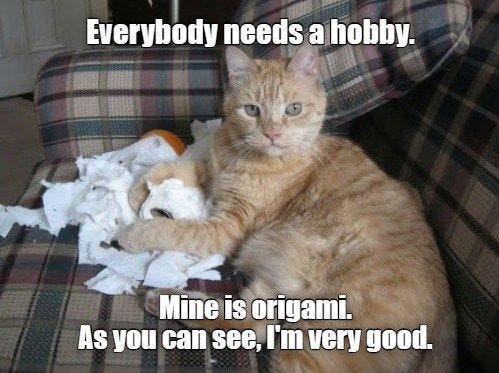
I feel like leisure now arrives with homework. The point of a hobby was that it did not need a point. Somewhere between the tracking app, the content ecosystem, the upgrade spiral, and the side-hustle fantasy, we took one of the last unproductive corners of life and taught it to fill out a timesheet.
Here is a finding that should bother more people than it does. A 2026 study at Duke ran six experiments on people doing activities they enjoyed — walking, reading, coloring. The result: when you measure how much of an enjoyable activity you do, you do more of it. And you enjoy it less. The researchers concluded that measurement makes enjoyable activities “feel more like work.” Tracking increases output and kills intrinsic motivation at the same time.
You already knew this, right?. Someone just finally proved it in a lab. Basically, the modern hobby comes with a dashboard.
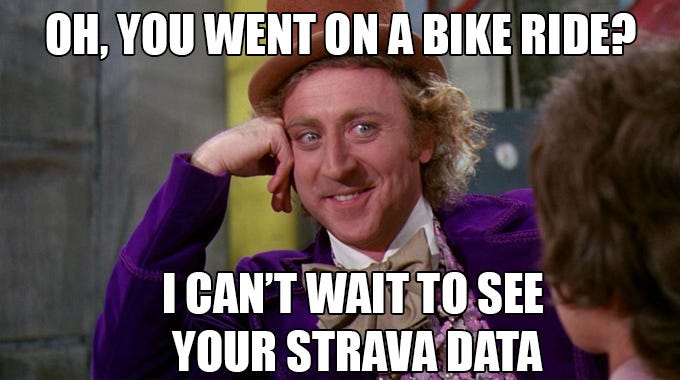
It is hard to relax when your downtime has KPIs. Strava is the clearest example. A study found runners modifying their workouts not for physical benefit but for how the data would look to followers — running rest intervals harder than intended to protect average pace, avoiding drills that would hurt overall stats. Users reported feeling lazy on rest days simply because other people’s activities were appearing in their feeds. Injured runners stopped using the app entirely because seeing others log miles made them anxious. An anti-Strava movement now exists — people who deleted the app and report that running became enjoyable again almost immediately.
Running becomes splits. Reading becomes yearly totals. Language learning becomes a Duolingo streak, a number so psychologically loaded that people report genuine dread about breaking it after 500 days. The owl is no longer charming. It is a small tyrant made of guilt and sunk cost. Even the Apple Watch will only ever tell you to do more — it has no setting for “you’re sick today.” People have been documented pacing their living rooms at 11:30 PM to close rings they forgot about. One person’s doctor’s first recommendation was to remove the watch.
In my humble opinion, nothing kills delight faster than optimization. Once you can track your leisure, your leisure starts tracking you back.
The internet turned enthusiasts
into unpaid professionals.
Here’s my theory: before the internet, a hobby had natural limits on how seriously it could infect you. You could be obsessed with coffee and have no idea that somewhere in Tokyo, someone was CT-scanning espresso pucks to analyze crema distribution. The ceiling on your obsession was set by geography. But then social media removed that ceiling and replaced it with a professional class. Now every hobby now has a YouTube ecosystem. Every interest has a Reddit community where the top-voted comments were written by people who have been doing this for fifteen years and feel strongly that you are doing it wrong. You look up “how to make sourdough“ and end up watching someone explain why your starter is probably already dead. Social media has made it easier to learn anything and harder to play with anything.
Communities that were supposed to create belonging instead became comparison engines. You enter because you love the thing. You leave feeling behind. To have a hobby now is to enter a low-stakes arms race.
Letterboxd went from 1.8 million users in March 2020 to 17 million by January 2025. In 2022 alone, users submitted 227 million film ratings. Dazed documented users thinking about their Letterboxd rating during films rather than engaging with what was on screen. A Cambridge student writer described her own profile as “a carefully arranged exhibition of taste — one classic, one international, one contemporary, one wildcard. It signals range. Whether it truly reflects your favourites feels almost beside the point.”
You are not watching a movie. You are preparing a take. Hobbies used to be an escape from judgment. Now they come preloaded with it.
Here’s another theory: A lot of hobbies are no longer hobbies. They are alibis.
You run so your life looks disciplined. You read so your mind looks alive. You cook so your adulthood looks functional. You collect records so your taste looks textured. You lift so your body looks managed. You travel so your memories look photogenic. The modern hobby is no longer just pleasure. It is evidence for the defense.
Look at what BookTok has done to reading. Average Goodreads users read about 17 books a year. BookTok influencers publicly complete a hundred or more. NBC News ran a piece in 2025 on “performative reading,” profiling a 25-year-old who admitted she had started choosing shorter books because she was chasing the number, not the experience. The Goodreads challenge widget — which tracks how many books ahead or behind schedule you are — is doing to reading exactly what Strava did to running: converting a private pleasure into a benchmark you set for yourself, forgot why you set, and now cannot stop measuring against.
One BookTok creator told the Bookseller that reading goals “feel really corporate, almost like a performance review.”
Joy dies the moment it starts asking for performance reviews. A hobby should not feel like another place to fall behind.
What disappeared from modern life was not leisure exactly, but useless leisure. The kind that did not need to build character, produce evidence, generate content, create community, improve health, sharpen taste, or hint at future income. We still do things in our spare time. But increasingly we ask those things to justify themselves in the language of growth. And the moment a hobby has to start making a case for its own value, it has already become something else.
In modern life, even rest has to justify itself.
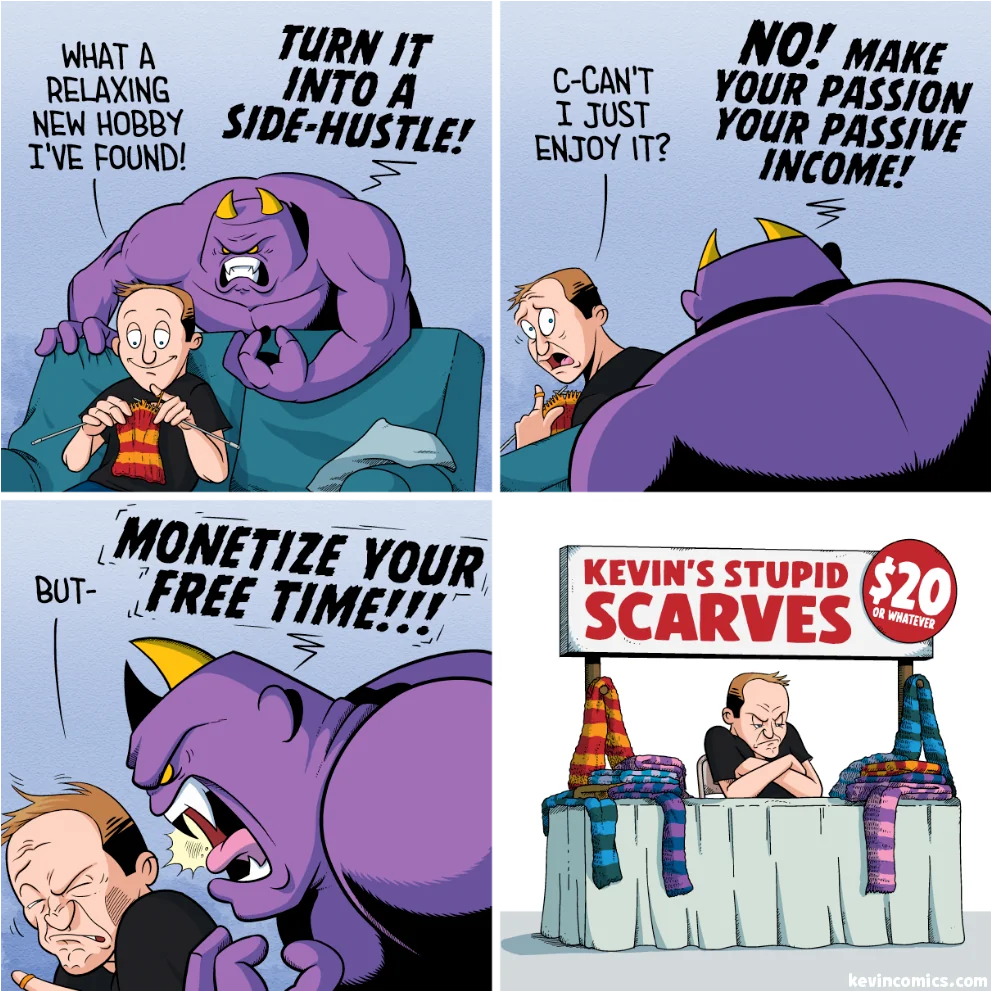
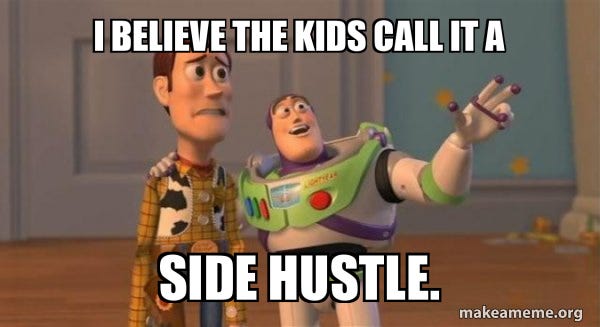
Some of the saddest advice in modern life is: “You could make money from that.”
About 36% of American adults had a side hustle in 2024. Among those who tried to monetize their passions, 67% reported burnout. The median side hustle earns $200 a month. Most people converting a hobby into income are getting poverty wages for the privilege of turning the one thing they loved freely into something with deadlines.
If every pleasure becomes a project, the self never gets a day off.
The hobby economy runs on a simple promise: you are one purchase away from becoming the kind of person you imagine yourself to be.
The global specialty coffee market hit $101.6 billion in 2024. Vinyl records hit $1.4 billion in U.S. sales last year, the 18th consecutive year of growth. Here is the detail that stays with me: approximately half of vinyl buyers do not own a record player. They are buying artifacts of taste. Not music delivery. The record is no longer primarily a way to hear music. It is proof of the kind of person you are.
The average American craft enthusiast now spends $3,200 annually on supplies, up 67% since 2020. The running shoe market is $20 billion and growing. And this is before you count the apps, the subscriptions, the classes, the shelving units for displaying the gear, and the content creators whose entire job is to tell you what people who are serious about this actually use.
The market loves hobbies because hobbies create endless inadequacy. Every upgrade implies the previous version was insufficient. Every new technique implies your knowledge is incomplete. The hobby industry does not sell products. It sells the feeling that you are always almost good enough, and the right purchase will finally close the gap.
What looks like personality is often just purchasing power with better lighting.
I think we are losing the ability to do things badly and still call it a good day.
People used to sing badly in choirs — I know I did. They painted bad watercolors and hung them on refrigerators. They played tennis without understanding topspin. They ran slowly, with bad form, and came home satisfied. The badness was not a problem. The badness was the point.
But we do not know how to be amateurs anymore. The amateur might be one of the most endangered species in modern life LOL. And the reason is structural. When you learn any hobby from the internet, the algorithm does not surface other beginners. It surfaces the best. You are three weeks into painting and YouTube is showing you someone who has been doing it for twenty years, and you are measuring yourself against that, not against your neighbor who also started three weeks ago and is also making confused rectangles.

The APA published a meta-analysis finding that perfectionism has linearly increased across every generation since the late 1970s. All categories. All the time. Young people are not just more self-critical than their parents. They believe others expect more of them, and they believe those others are right.
Youth sports participation for kids aged 6 to 17 dropped 27% between 2019 and 2025 — millions and millions of children are not playing team sports. Researchers traced this partly to professionalization: pay-to-play models and early specialization have made casual participation feel like failure. Children, who process shame very efficiently, are quitting.
Being bad at something used to be normal. Now it feels like a branding problem.
A hobby should absorb
our ego, not decorate it.
I suspect one reason people cling so hard to hobbies now is that they need them to do far more than entertain. A hobby has to prove you still have a self outside work. It has to make your life feel less generic. It has to soothe you, distinguish you, and reassure you that your free time is not being squandered. Which is a lot to ask from pottery, or running, or coffee, or books. The tragedy is not just that hobbies got more serious. It is that we now need them to carry emotional weight they were never designed to hold.
The more fragile identity feels, the more hobbies become load-bearing. Which explains why people get so intense about seemingly trivial things. They are not really arguing about the coffee. They are arguing about whether their life makes sense.
Philosopher C. Thi Nguyen called it “value capture” — platforms present us with simplified versions of our values, which we then internalize until the proxy replaces the real thing. A fitness tracker gamifies movement until step count replaces actual health as the thing being valued. Nguyen is direct about what this means when it escapes the gym: “If you understand why games are great, then you should see that gamification is a fucking existential horror.”
What makes a hobby restorative is not mastery. It is irrelevance. The point was never to get better at the hobby. The point was to become less useful for a while.
Finding Joy in Your Hobbies Again — Nerd Out. Care Too Much. It’s Not Cringe.
What we lost was not just fun. It was one of the last places where being unproductive still felt innocent. Elizabeth Gilbert wrote in 2015 that enjoying your creative work with your whole heart is “the only true subversive position left to take” — that it is, in her words, “such a gangster move, because hardly anybody ever dares to speak of creative enjoyment aloud, for fear of not being taken seriously.” She was right then. She is more right now. The culture has only tightened since.
So here is my actual position, for what it is worth.
Nerd out. Care too much. Love things that do not help your career. Replay the game. Rewatch the anime. Memorize the lore. Talk too much about the thing you love to people who did not ask. Passion is not cringe. A life without obsession is just maintenance.
So do It badly.
Do it anyway.
Just give yourself permission to be an amateur. The truly radical hobby now is the one you are bad at and never post about. The one that leaves no record. The one that improves nothing and proves nothing and is, frankly, a little embarrassing. Something you do alone or with people you like, with no outcome in mind, that vanishes when you’re done and makes you slightly late for something more important.
A hobby was never supposed to make you better. It was supposed to make you less available to the world for a while.
Turns out that’s not nothing. Turns out it might be everything.
What I Found
4 things I can’t stop
thinking about this week
RAYE — This Music May Contain Hope
Seventy-three minutes; seventeen songs; four acts structured like seasons. Most artists making their second album play it safe. RAYE went full Broadway. The record is a concept album about overcoming self-doubt and heartbreak, framed like an extravagant theatre performance, and somehow it earns every single one of its indulgences. She duets with Al Green on a vintage Memphis R&B tribute, sings with her grandfather in “Fields,” and performs “Joy” with her sisters. The whole thing ends with RAYE reading four minutes of production credits out loud over closing music. Absurd. Perfect! Having been encouraged during her major label days to stay in her lane as a dance-pop artist making bops for All Bar One and Love Island, she’s now swinging as big as anyone working in pop today. Start with “Where Is My Husband!” and don’t stop.
The Twilight Sad — It’s the Long Goodbye
Seven years between albums. In that time, frontman James Graham’s mother was diagnosed with early-onset dementia — and eventually passed away — and that loss sits at the emotional core of every song. Robert Smith of The Cure, who has championed the band for over a decade, contributes guitar, bass, and keyboards to three tracks. The result is a bruising, cathartic scream of grief that swings between the strangely anthemic and the quietly devastating. It is not background music. It is the kind of record that asks something of you, and gives back more than you put in. One of those albums you will remember exactly where you were when you first heard it.
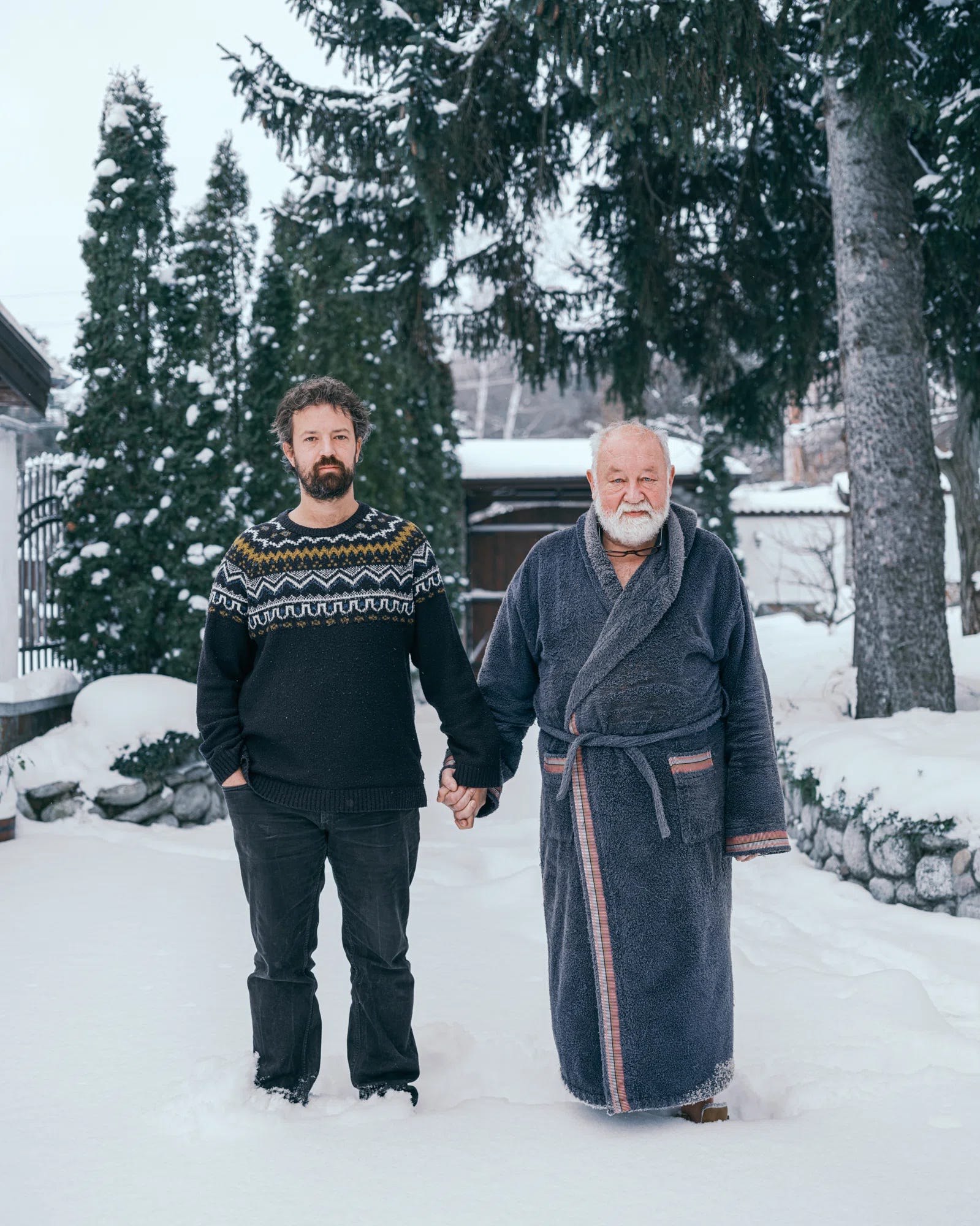
Valery Poshtarov — Father and Son
A Bulgarian photographer realized his young sons would one day stop holding his hand on the way to school. That feeling — a sudden awareness of the inevitability of change — sent him to photograph his own father and grandfather holding hands first, and then kept going: fathers and sons across Bulgaria, Turkey, Italy, Georgia, France, holding hands in front of cameras, often for the first time in years, sometimes decades. The project is called Father and Son, and Poshtarov intentionally keeps the subjects anonymous so the viewer is invited to finish the narrative and find their own story inside the gesture. I’ve been staring at these photos for days. Worth your full attention.
Why It Took Decades for The Replacements to Get Their Due - Pitchfork
The Pitchfork article on why it took the world decades to catch up to The Replacements is everything good music writing is supposed to be and increasingly isn’t. Paul Westerberg and the band were too messy to be cool, too pop to be punk, too drunk to be taken seriously — and in hindsight, that gap between what they were doing and what the critics were able to hear at the time says more about the critics than the band. The piece is a reminder that some of the most important things made don’t get their due until people are ready for them. Read it and then go listen to Tim front to back.
God this is so correct and necessary to say.
This reminds me of my best teacher saying, amateur means lover. So it shouldn't be pejorative. Doing something because you love it is a great place to start and could be a fine place to stay.